A Moment in Space to Reflect: 18 Tears
Problem
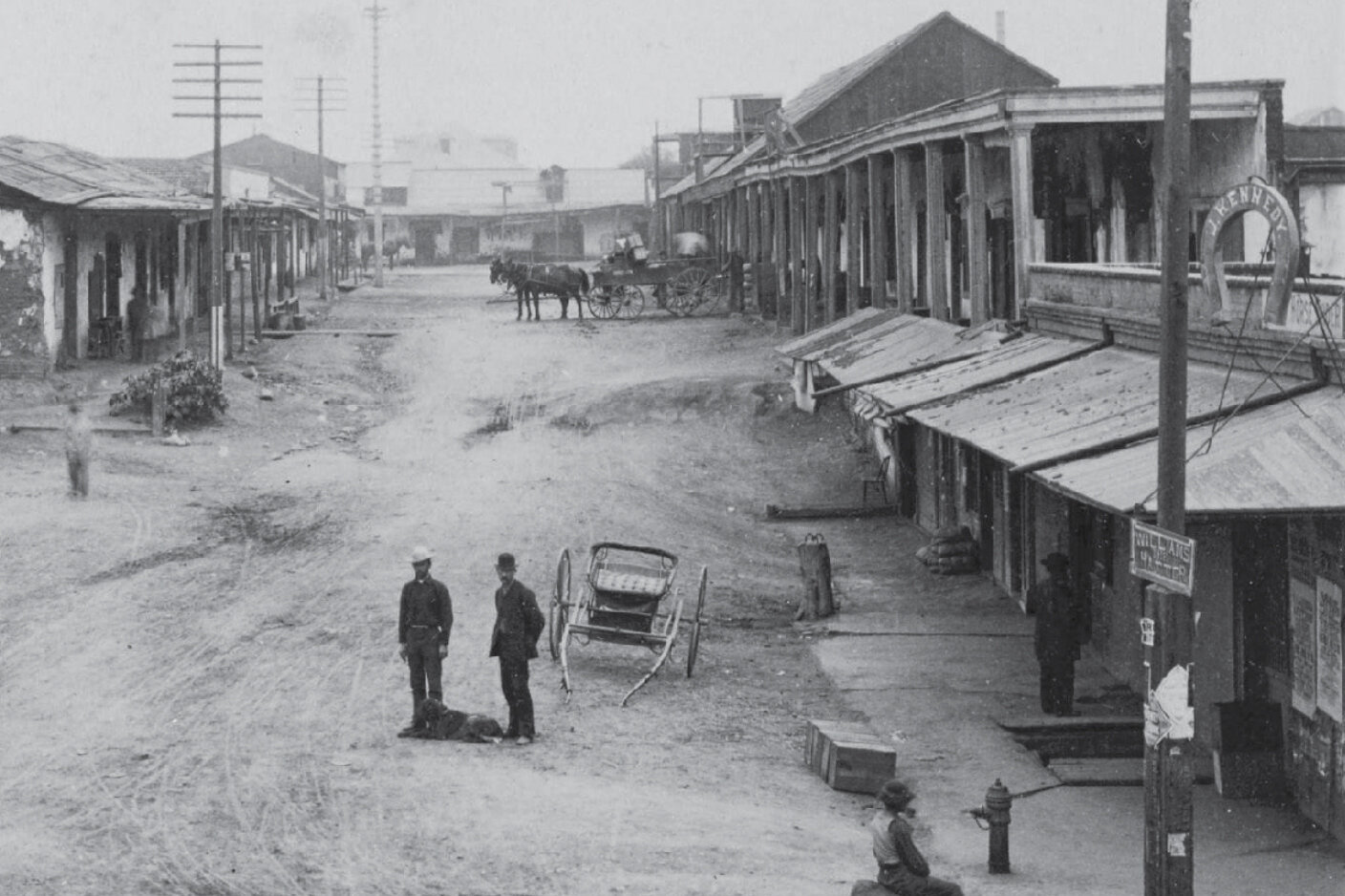
The 1871 Los Angeles Chinese Massacre is a mostly unknown incident, even to the American Chinese themselves. Currently there is not a memorial for the incident. However, there are metal plaques on the ground outside the Chinese American Museum to remember this incident, but they are hard to read and often not seen. This project is to design a memorial for the 1871 Los Angeles Chinese Massacre.
History
On 24 October 1871, 18 Chinese were killed by an angered mob because of the death of a a bar tender, a white man. The Chinese people in Los Angeles were split into two tongs that did not get along. A Chinese woman was to be married to a man in one of the factions, but was abducted by the other and forced to marry a man in that faction. This deed increased the hostility of the two factions until they were attacking each other with gunfire. When the event could be heard, Robert Thompson the owner of a saloon stood in the doorway of the Coronel building and fired his gun out into the darkness where the altercation of the Chinese tongs took place. The bar tender was shot and killed by an unknown person from outside or inside the saloon. After the bar tender was fatally shot, the white and Latino Americans were angered and inhumanly attacked the Chinese residents. The 18 Chinese were shot, hung, and beaten.
Multiple sources have slightly different interpretations of the massacre and I wrote only a brief summery of the incident, so I encourage you to look into this massacre if you would like to learn more. My primary source of information for this project was from the Chinese American Museum located in the El Pueblo in Los Angeles, California.
Solution
This project is to design a prototype memorial for the 1871 Los Angeles Chinese Massacre that will be placed near the Chinese American Museum where this incident occurred. The memorial will address race, loss, intolerance, and violence to send a broader more universal message.
Concept Statement
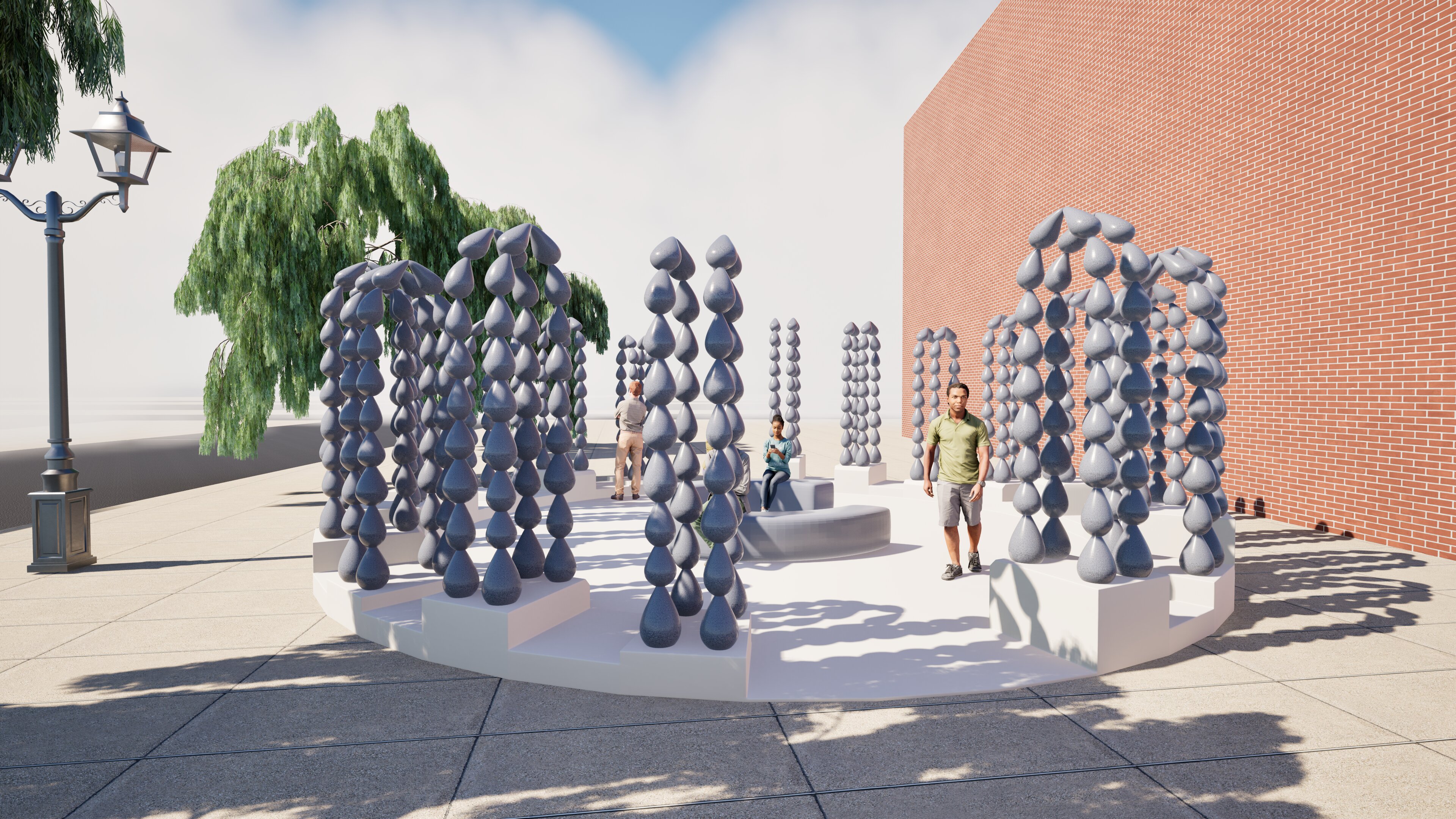
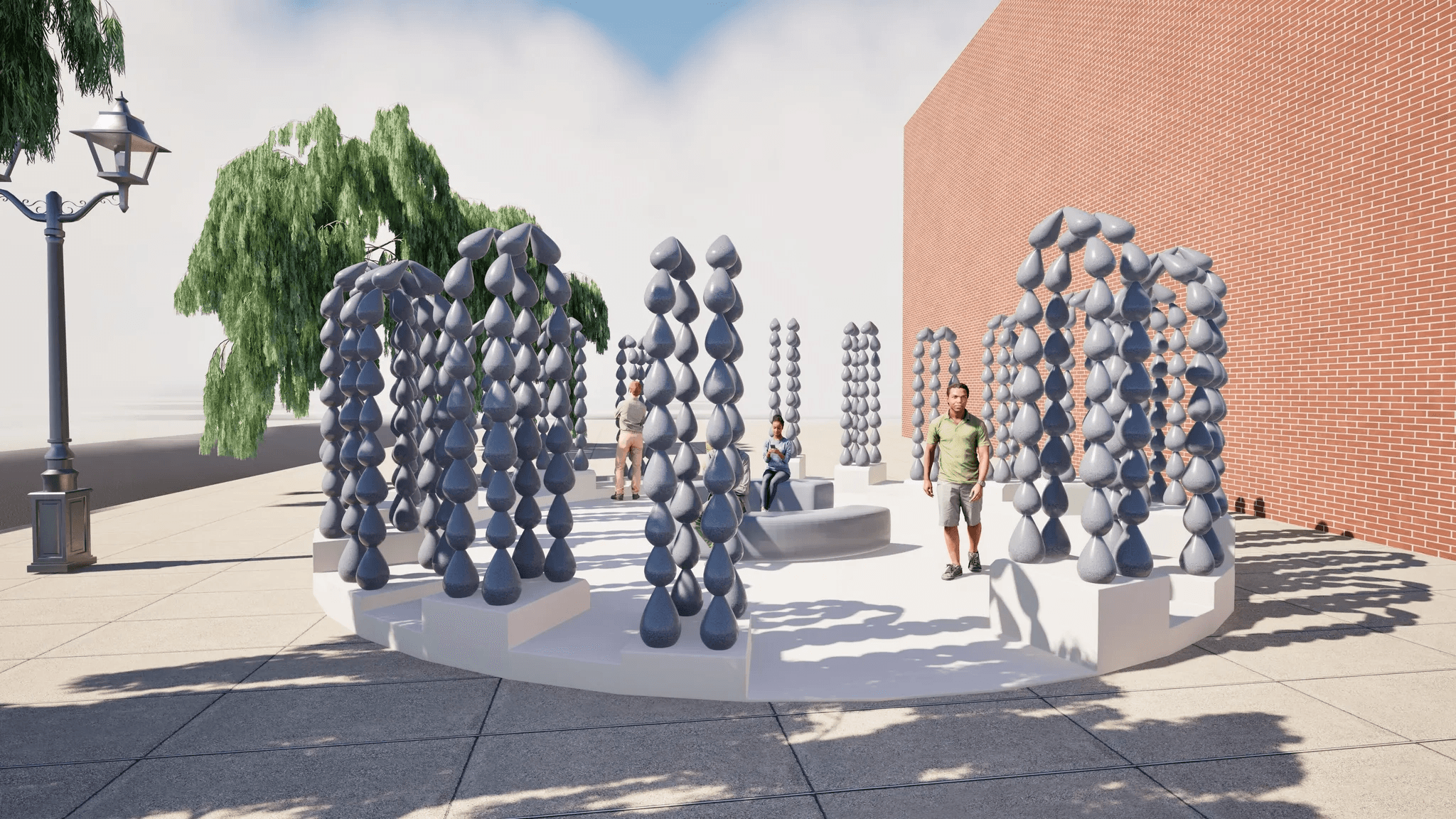
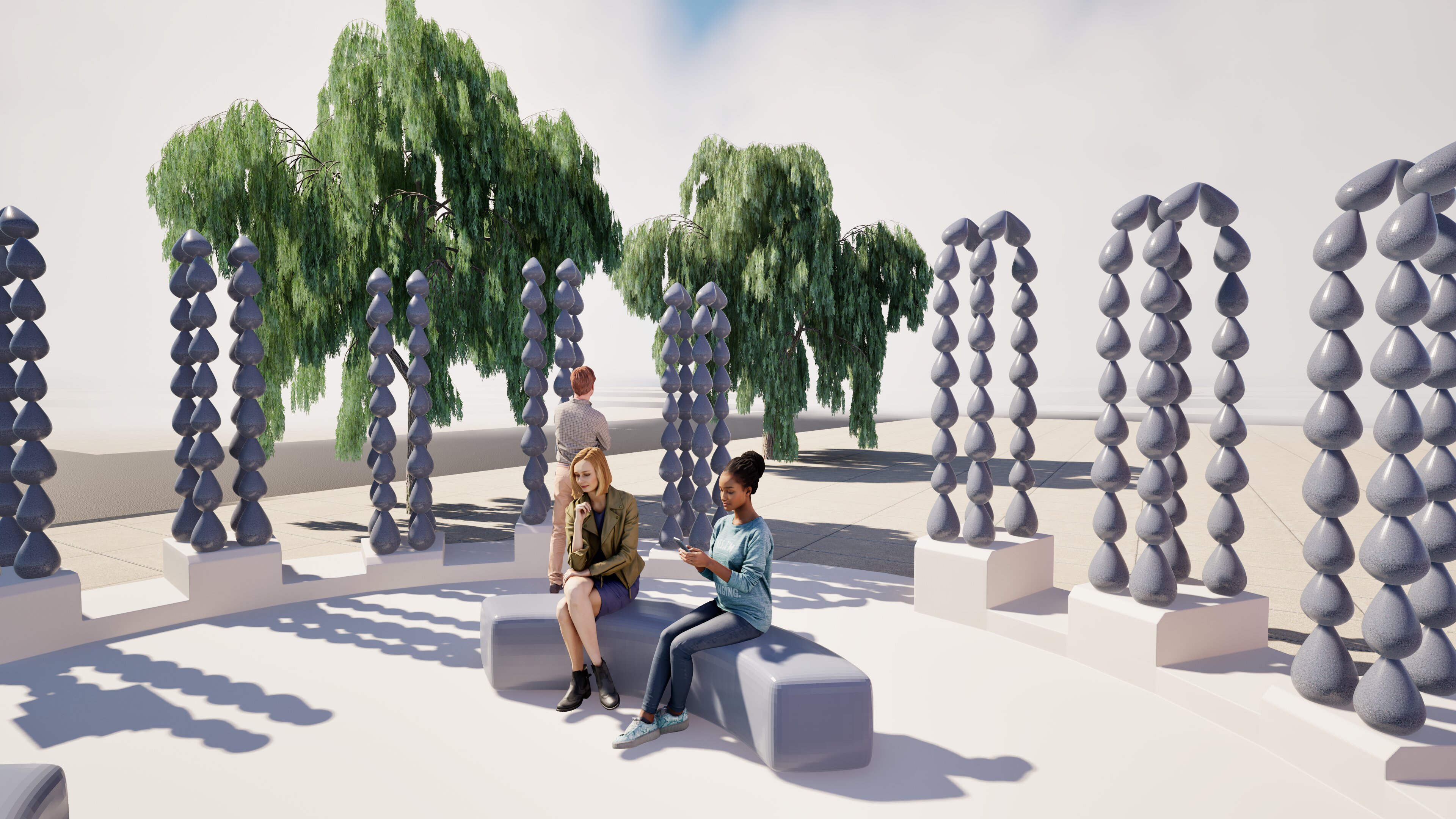
Walking through this memorial, it appears as though tears are flowing out of an invisible circle that surrounds you. Tears falling from varying heights end at a name inscribed on the stone, which represents the 18 Chinese who lost their lives during the 1871 Chinese Massacre. Being surrounded by tears at varying heights gives the sense of being trapped, the feeling of grief, and the perception of chaos. Shadows form on the ground from the tears of the memorial as the unfulfilled desires cry out.
The memorial is to take the viewer back to the time of the massacre to bring up what it is like to lose someone to violence brought on by prejudices. But also to show strength and resilience amidst adversity. This memorial is to educate people about the massacre as it is widely unknown, even to the people living in Los Angeles with Chinese ancestry.
Site Plan
The memorial is located next to the Chinese American Museum on the sidewalk of Los Angeles Street. This is the area where the massacre took place.
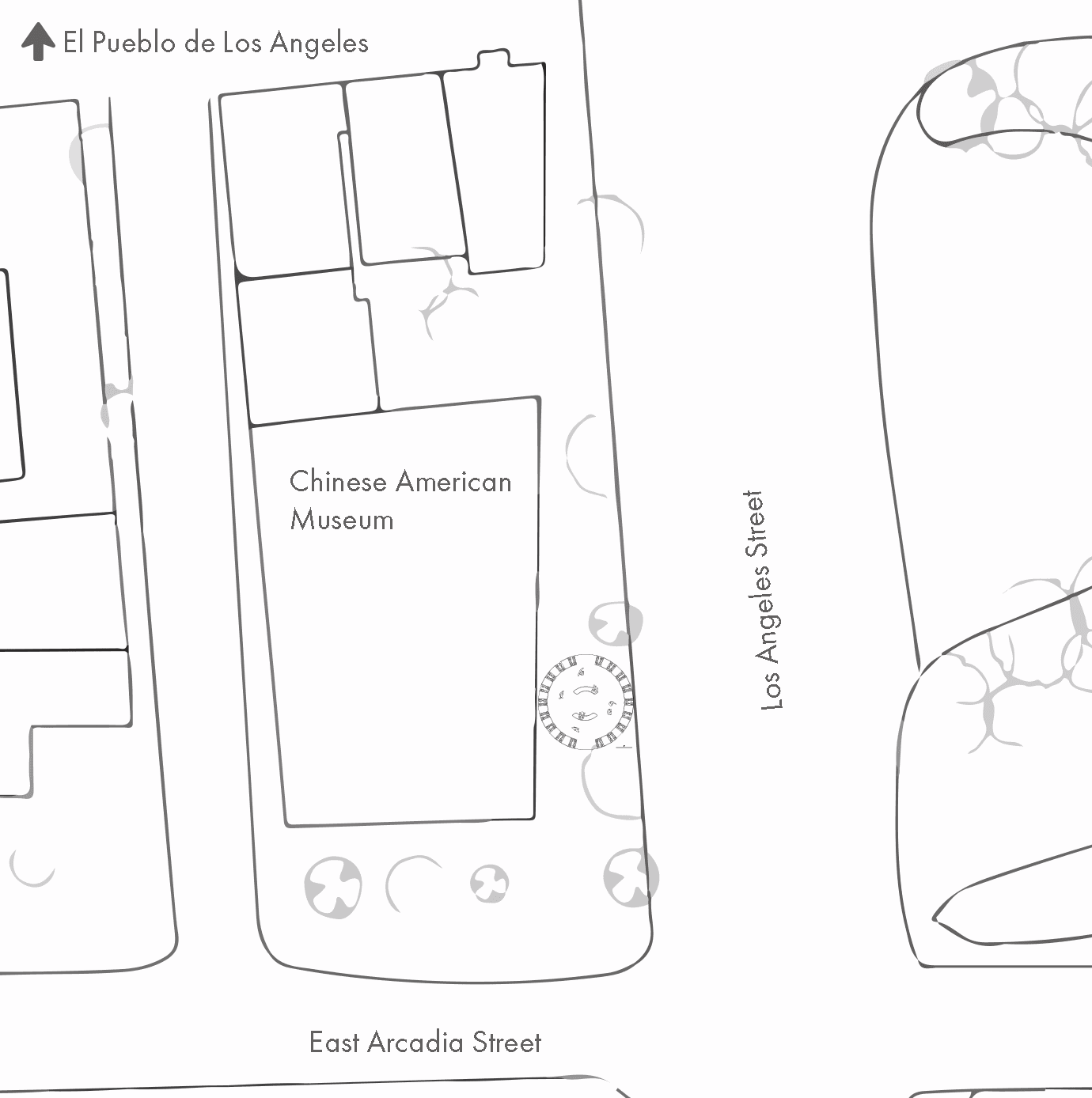
Two benches are placed in the middle of the memorial to block foot traffic from walking straight through, so noticing the memorial becomes unavoidable.

If people are wanting to contemplate the memorial they can sit facing outwards, looking at the memorial. People can also socialize by facing in when sitting, as the circular benches create a natural way for people to see each other when conversing.

Memorial Description
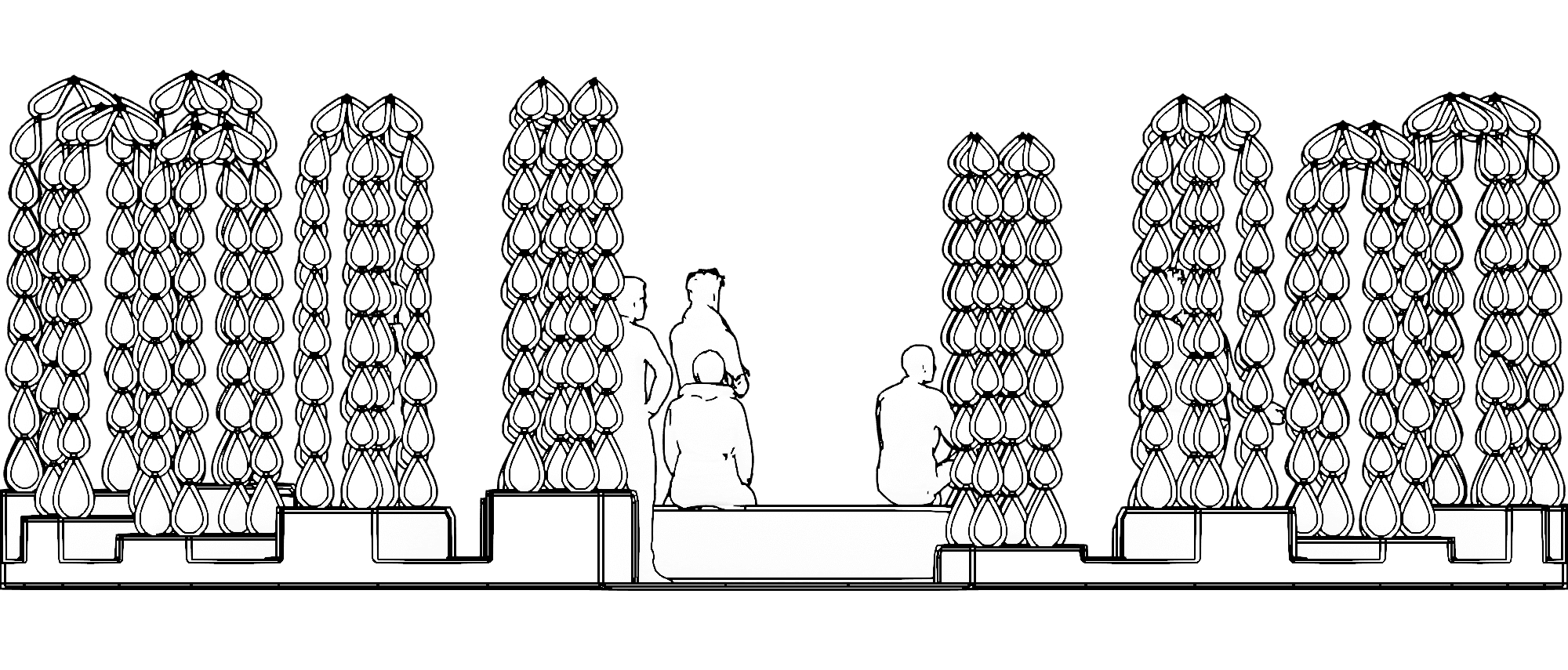
Each par of 36 tears is 10 feet tall that stand on an uneven surface to represent the person who died; no one is the same height, so each par of tears is also not the same height.
The tears are made out of polished granite with a blue hue to give the feeling that these are real tears. The platforms that the tears rest on are made of cement.
Symbolism
Strength: Ensō / Incomplete circle. The memorial is made of circles, some of which are implied or not complete. Trapped: By standing inside the memorial, you can see freedom through the posts made of tears, but can’t go through them.

Loss and Mourning: The beads that make up the pillars are the tears shed. Unconscious desires: The shadows that the tears of the memorial create represent the unfulfilled unconscious desires of the 18 Chinese.

Lives Lost: 18 sets of posts to represent the 18 lives lost. Varying heights of the tears symbolizes the people, because no person is the exact same height. Chaos: Varying heights illustrate the chaos of the massacre. When viewed from the outside, the sets of tears make the memorial look chaotic, but also organized.

Experience the pain of loss: Tear drop shapes are to represent the feeling of loosing someone. Oppression: The names are at the foot of the posts to make the viewer look down, as someone who is oppressed often does.

Research - Memorial Study
I chose a memorial from a list provided to me by my class professor and researched what strategies it implemented to be successful.
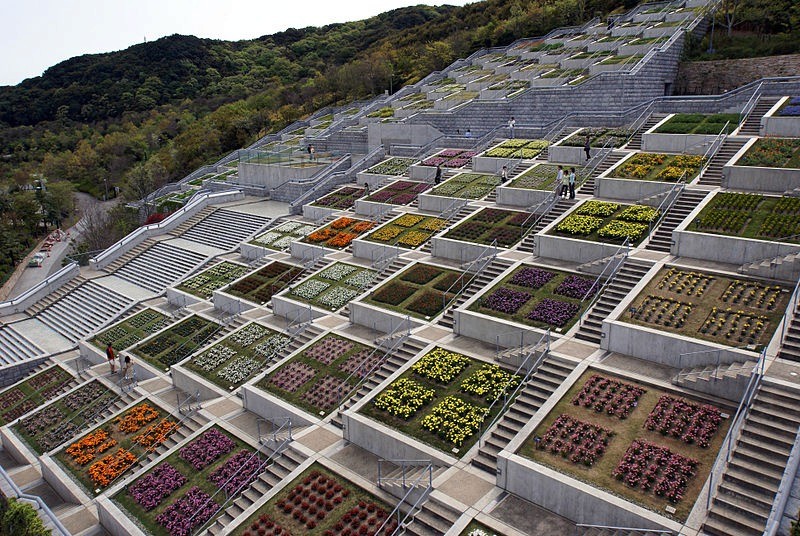
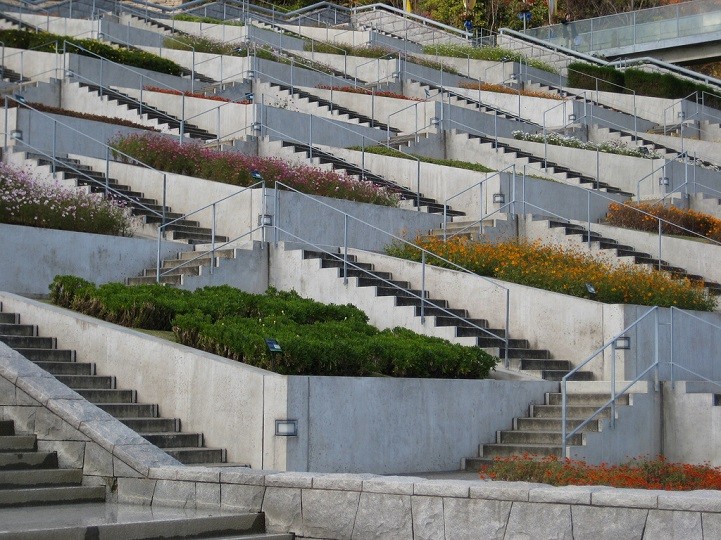
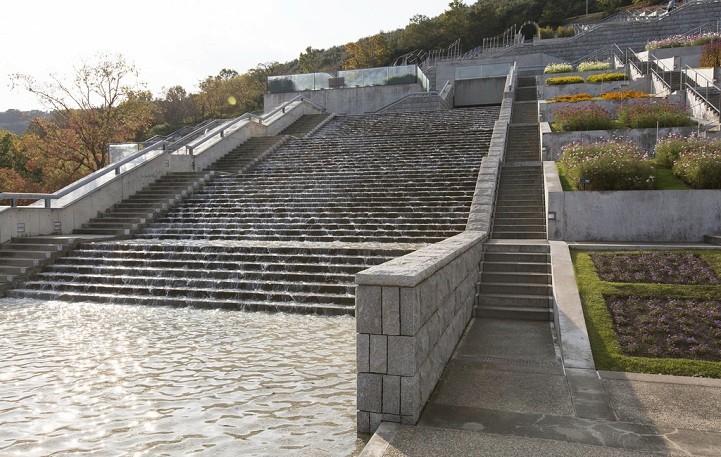
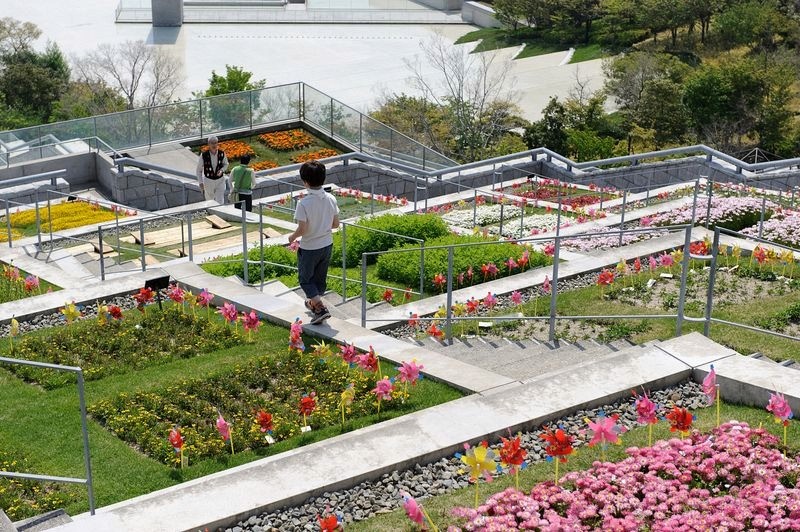
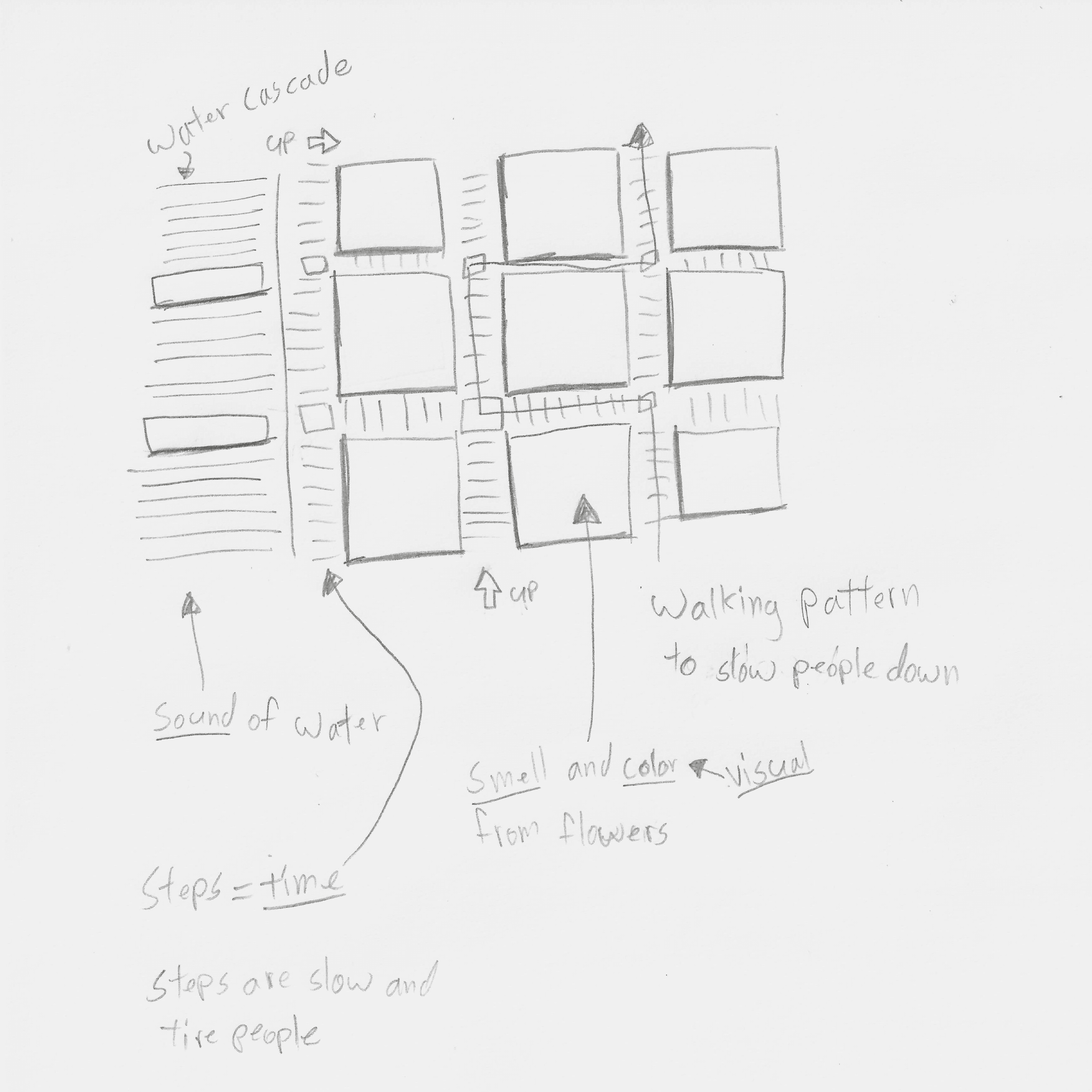
The 100 Stepped Garden appeals to human senses like sound, small, and sight. I was intrigued how Tadao Ando uses human senses to create an immersive environment that evoke emotions in the visitors.
Information
Name: Hyakudanen Garden, “The 100 Stepped Garden”
Year: 1990
Location: Awaji, Hyogo Prefecture, Japan
Designer: Tadao Ando
The Hyakudanen Garden is part of the resort Awaji Yumebutai, The World of Tadao Ando. After an earthquake shook Awaji Island, Ando revised his plan for the park and turned it into a memorial. The 100 Stepped Garden was constructed to remember the 6,000 people that passed away due to an earthquake. The mountain on which the garden resides was excavated for extending the shoreline of the Osaka Bay area and the construction of the Kansai International Airport.
The 100 Stepped Garden is made up of 100 square flower beds set in a repetitive rhythm on an incline. There is also a 10-meter-wide step-cascade of flowing water next to the garden.
Experience
The Hyakudanen Garden is part of the resort Awaji Yumebutai, The World of Tadao Ando. After an earthquake shook Awaji Island, Ando revised his plan for the park and turned it into a memorial. The 100 Stepped Garden was constructed to remember the 6,000 people that passed away due to an earthquake. The mountain on which the garden resides was excavated for extending the shoreline of the Osaka Bay area and the construction of the Kansai International Airport.
The 100 Stepped Garden is made up of 100 square flower beds set in a repetitive rhythm on an incline. There is also a 10-meter-wide step-cascade of flowing water next to the garden.
Symbolism
Renewal
The cascading water symbolizes life and renewal. In Japanese culture, water is a symbol of life, and a waterfall is a symbol of being cleansed of spiritual impurity.
Loss
The flowers symbolize the lives lost due to the earthquake.
Longevity
The number 100 symbolizes longevity. Symbolizing longevity is used to celebrate the life that was lived.
Ideation
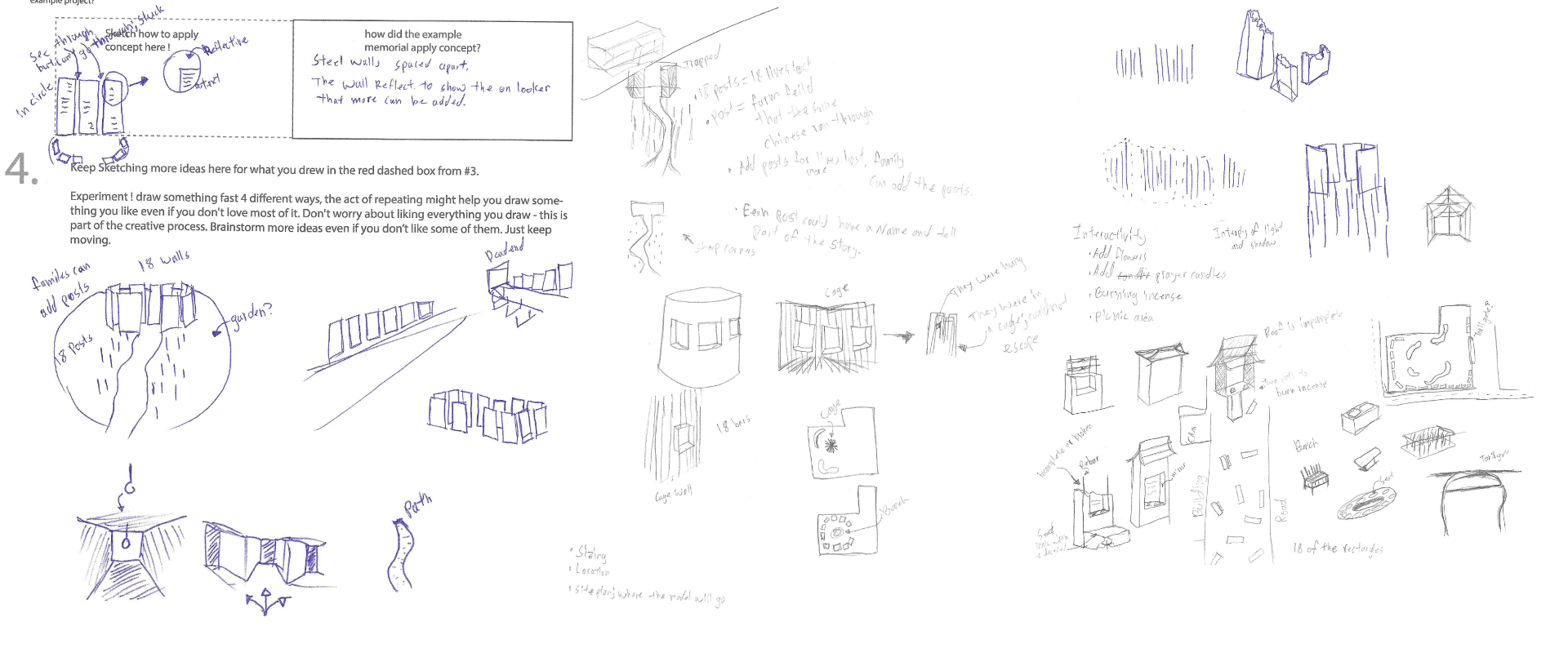
The memorial I was to design was to represent one main idea/concept. I started by quickly writing down words that the memorial could be inspired by, then came up with nontraditional ideas for how those words could be used to design the memorial. The memorial was to represent the main concept that is not a conventional plaque or statue.
Concepts that I thought of for the design
Incomplete
Celebration of life
Trapped
Chased
Void of hope
Mourning
Loss
Racism
Strength
Education
Respect
Chaos
By studying memorials that represent my concepts, I found that Society’s Cage closely resembled my concept of incomplete. Society’s Cage has lots of void space and implied lines that together imply its cube shape. Similarly, my memorial design could incorporate incomplete but implied shapes to portray incomplete, hopelessness, or dread. An unfinished circular structure or path that leads to a dead-end could represent how the lives lost were unfinished. Dread and hopelessness could also be represented by an incomplete path.

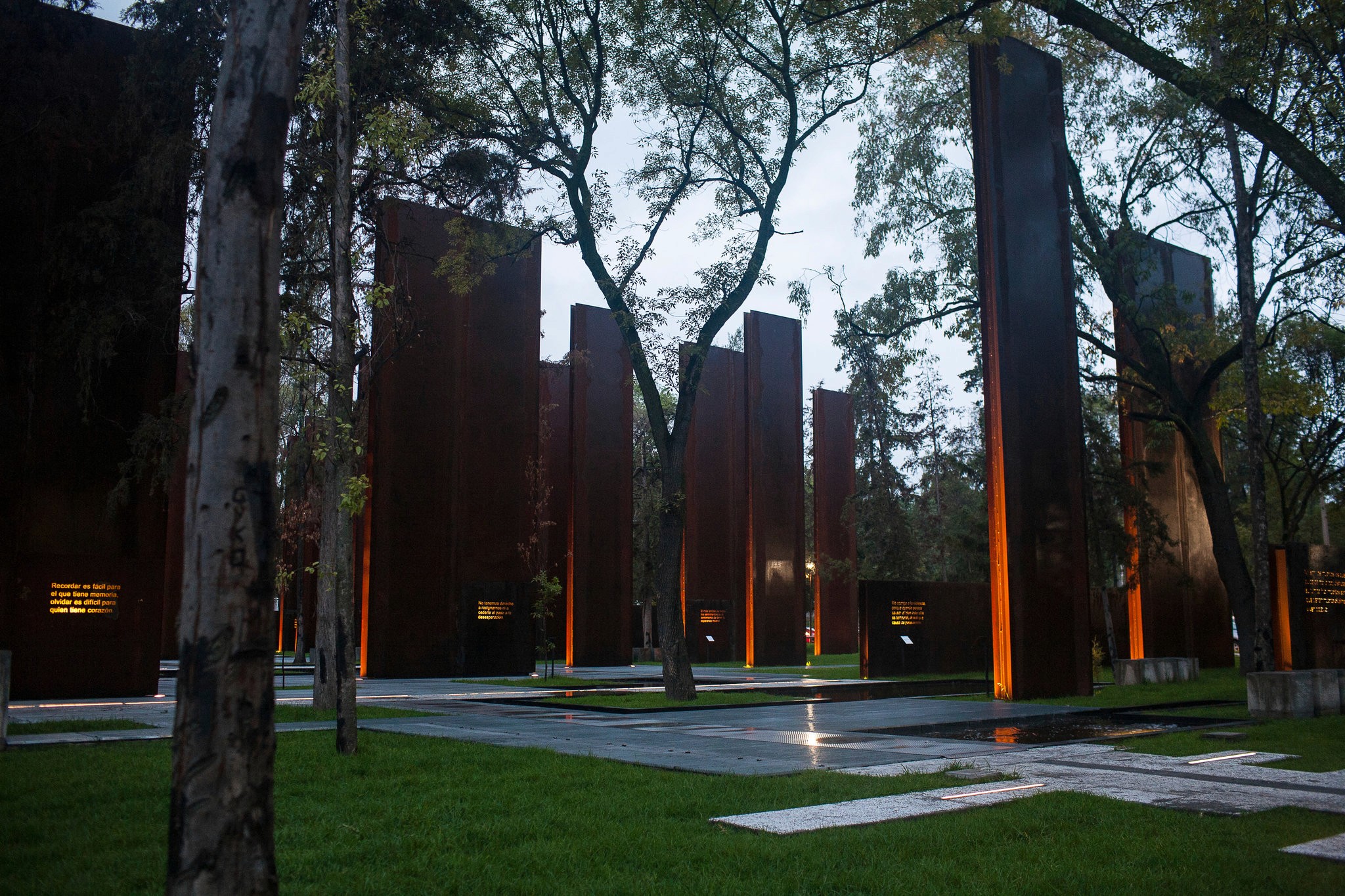
I also looked into the Memorial to Victims of Violence In Mexico City. The steel walls in this memorial reminded me of how the Chinese were trapped and could not escape from their attackers. Tall but narrow walls could be placed spaced apart in a way for visitors to experience what it is like to see freedom without being able to attain it; looking through the gaps in the walls but not being able to get past them resulting in the feeling of being trapped.
On a more technological side of experiencing the memorial, QR codes could be used to provide more information about the massacre. In a time when almost everyone has a smart phone and enjoys video media, using a QR code to provide information may appeal to a more technological audience.
Reflection
I would have like to add an educational element to intrigue viewers to want to learn more about the massacre and visit the Chinese American Museum. Currently, there are no signifiers that this is a memorial to the 1871 Chinese Massacre or anything about the incident, so views would be left confused.